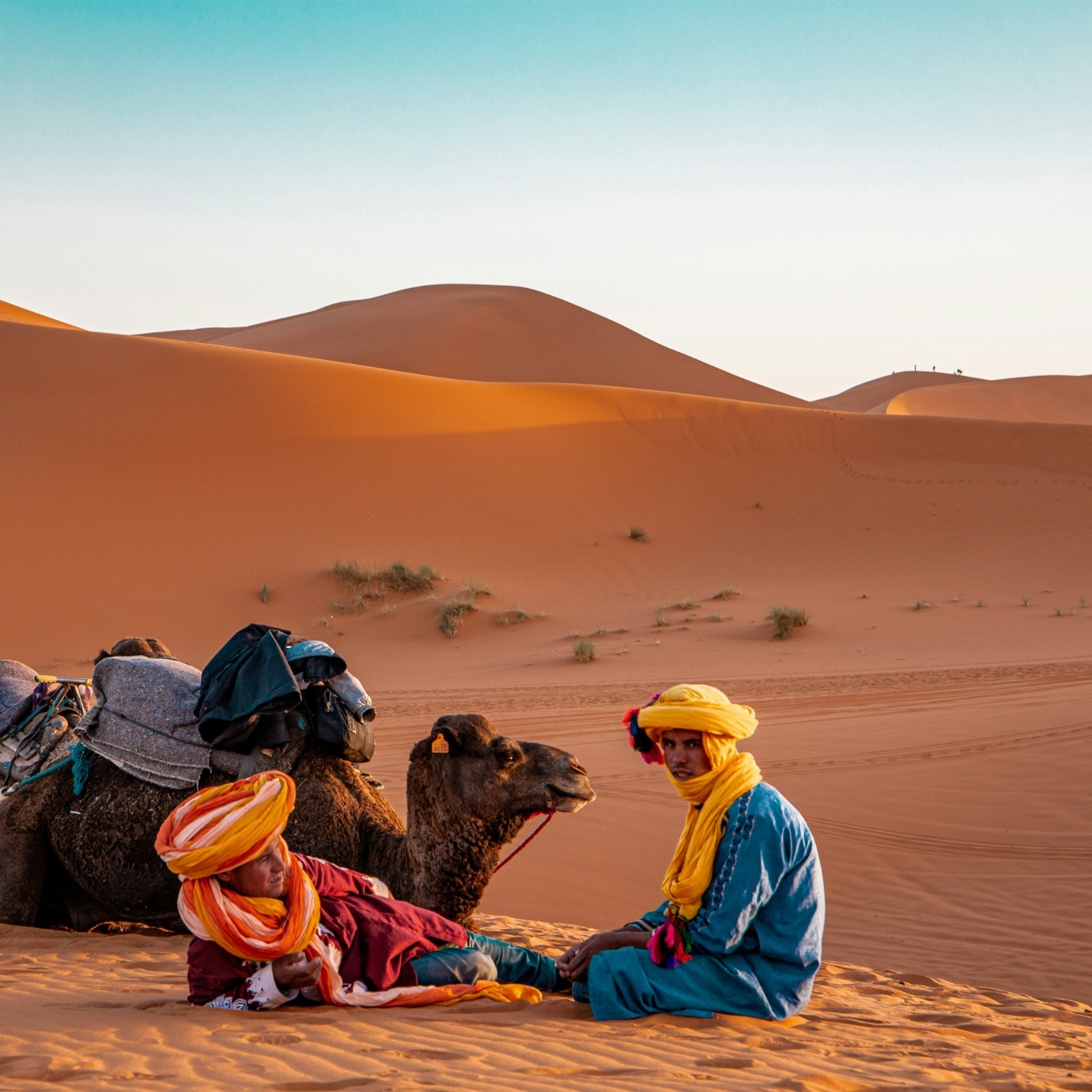
Sahara Desert Sunset Adventure
The Moroccan Sahara is not just a destination — it is an experience that changes how you perceive time, space, and silence. A Sahara Desert sunset adventure is often described as the emotional highlight of a journey through Morocco, not because of luxury or spectacle, but because of its raw simplicity and overwhelming scale.
As the sun slowly descends behind endless dunes, the desert reveals its true character: vast, quiet, and profoundly humbling. This is the moment when travelers stop observing and begin feeling.
Sahara Desert Sunset Adventure – Where Silence, Sand, and Sky Become One
Entering the Sahara: The Journey Matters
Reaching the Sahara is a journey in itself. Whether approaching from the south through ancient caravan routes or from the Atlas Mountains via desert valleys and kasbahs, the transition is gradual but powerful. Villages become sparse, roads fade into tracks, and the horizon stretches wider with every kilometer.
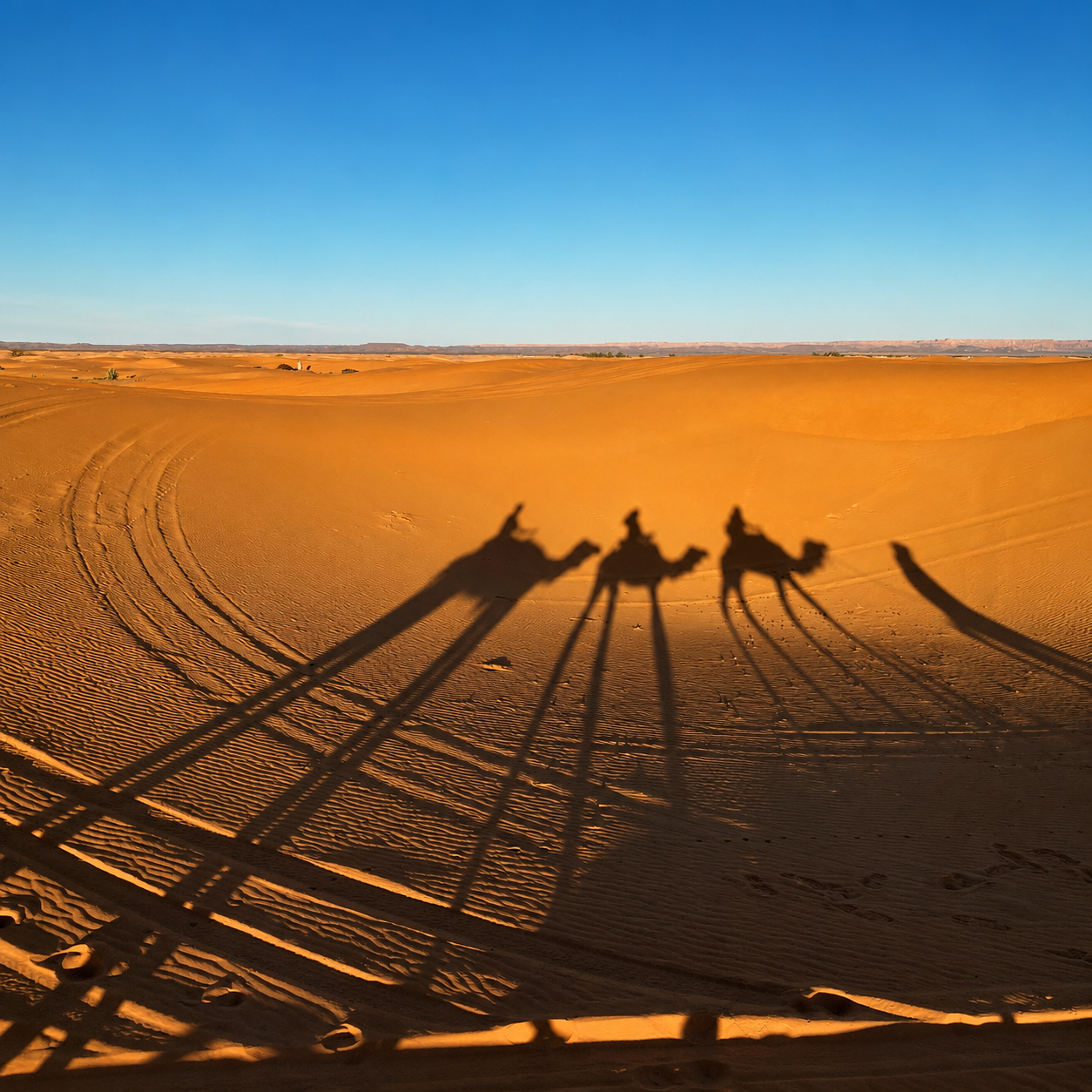
The final approach to the dunes — often by camel or 4×4 — marks the symbolic crossing from the modern world into a timeless landscape shaped only by wind and light. Here, the Sahara does not announce itself loudly; it unfolds slowly, allowing you to adjust to its rhythm.
The Sunset: A Daily Ritual of Color and Stillness
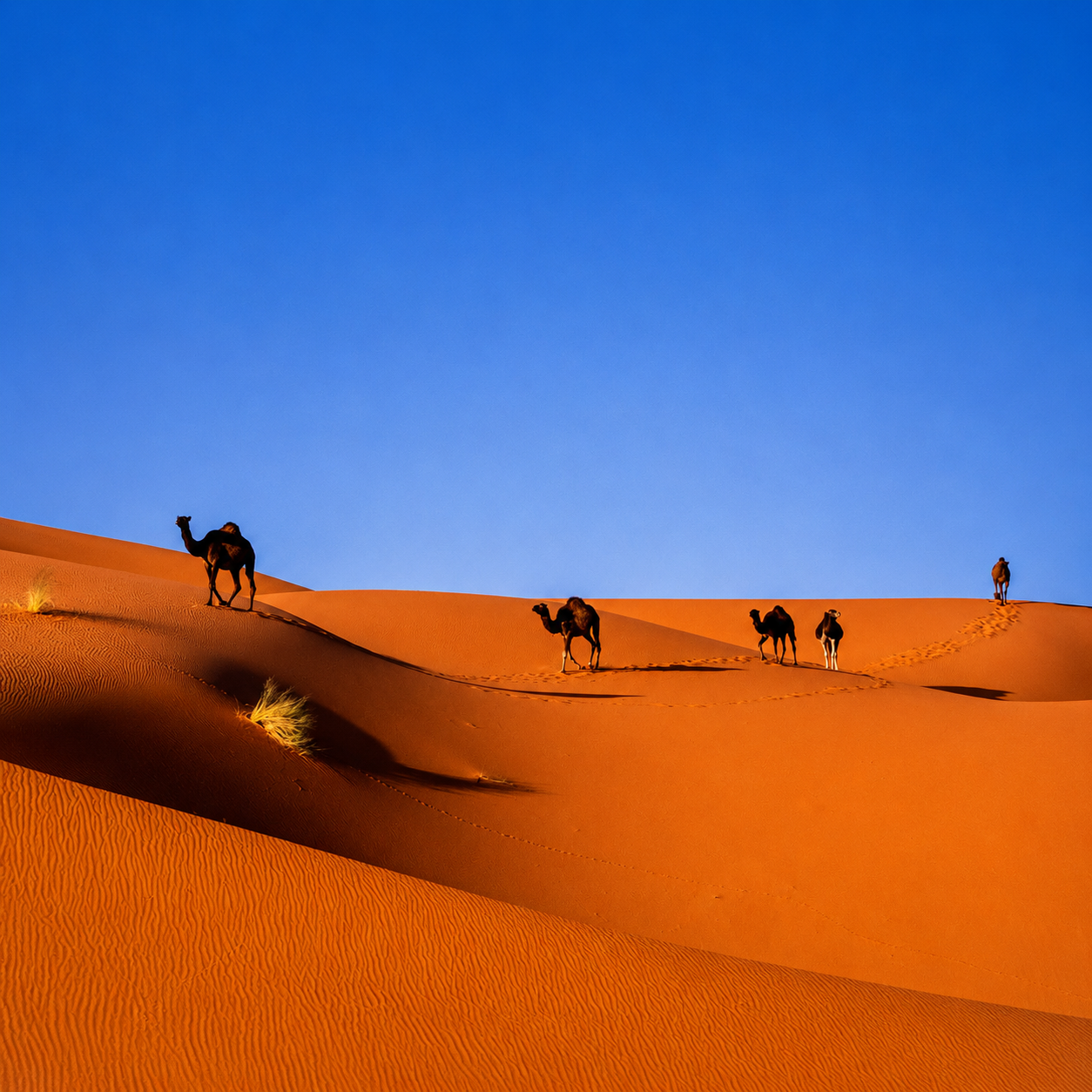
As evening approaches, the desert prepares for its most iconic moment. The heat softens, shadows grow longer, and the dunes begin to glow with layers of gold, amber, and deep orange.
Watching the sunset over the Sahara dunes is not a passive activity. You walk, climb, pause, and breathe. Each step sinks slightly into the sand, grounding you in the present. The silence is so complete that even small movements feel amplified.
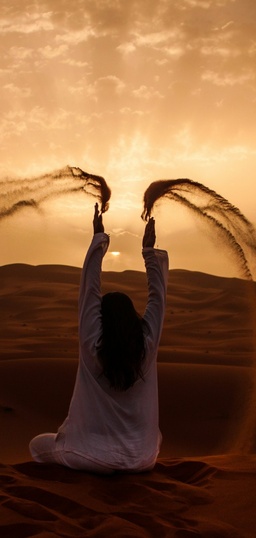
For many travelers, this moment becomes deeply personal — a pause for reflection, gratitude, and perspective. There are no distractions, no noise, no schedules. Only sand, sky, and time slowing down.
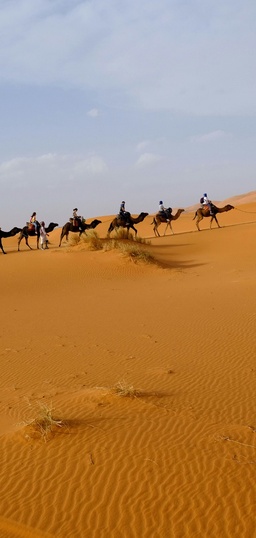
Life in the Desert

The Sahara is often imagined as empty, but it is very much alive. Nomadic communities have learned to coexist with its extremes for centuries, adapting their lives to scarcity, movement, and resilience.
Meeting desert inhabitants offers insight into:
Traditional nomadic lifestyles
Survival strategies in extreme environments
A relationship with nature based on respect, not control
Oral storytelling, music, and hospitality
The Sunset: A Daily Ritual of Color and Stillness
Best time to visit
October to April, when temperatures are comfortable
Where to go
Erg Chigaga and Erg Chebbi offer very different but equally powerful desert experiences
How long to stay
At least one night is essential; two nights allow deeper immersion
What to bring
Light layers, scarf, sunscreen, and an open mindset