
Atlas Mountains Trek & Berber Villages
The Atlas Mountains are Morocco’s backbone – a vast chain of peaks, valleys, and remote villages where time moves differently and traditions remain deeply rooted. Trekking through this region is not about distance or altitude; it is about connection. Every step takes you closer to a way of life shaped by mountains, seasons, and community.
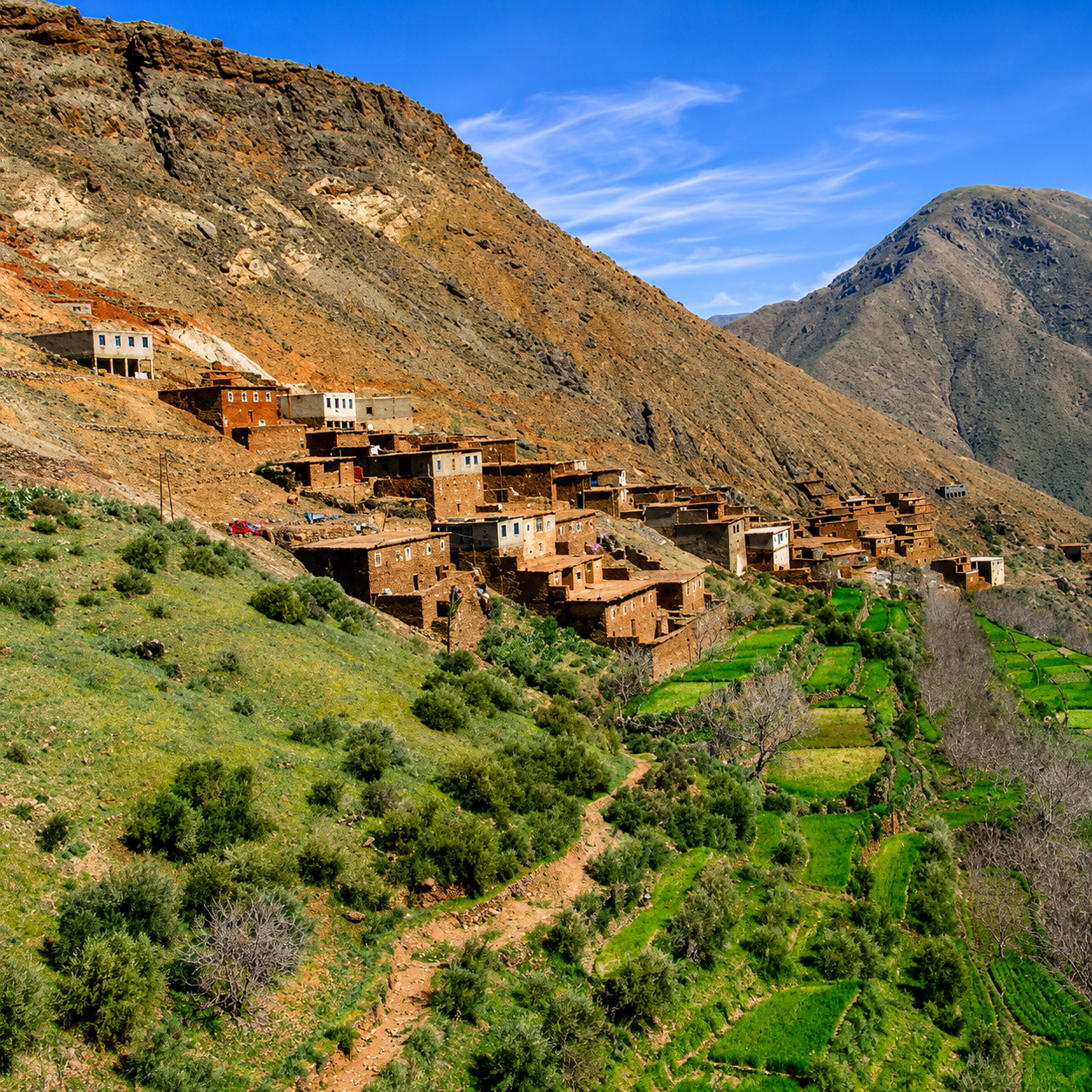
This journey leads you far from city noise into landscapes where stone houses cling to hillsides, terraced fields follow the curves of the land, and hospitality is offered without ceremony.
Atlas Mountains Trek & Berber Villages – Walking Through Morocco’s Living Highlands
A Journey into the Blue Medina
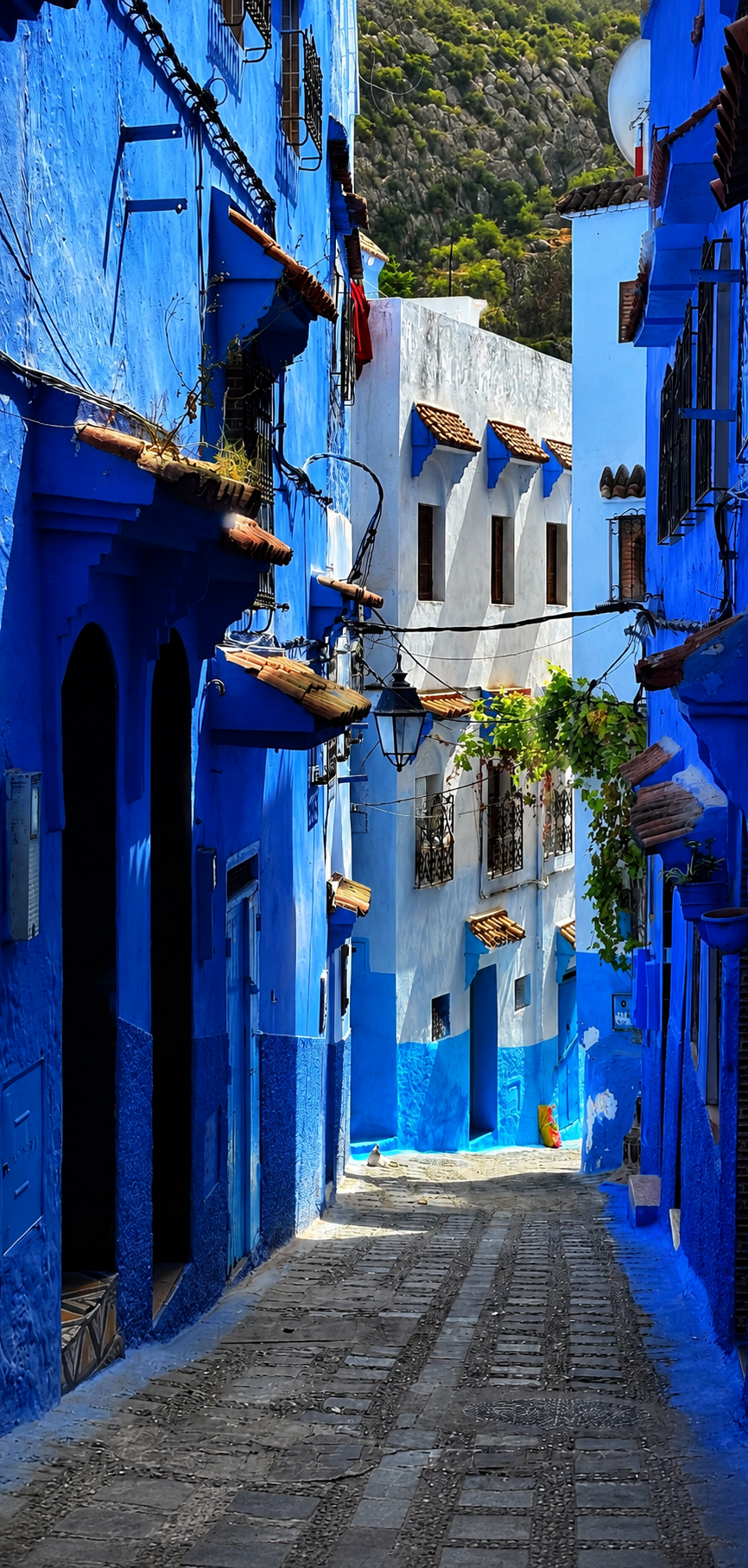
Once you step through the old gates into Chefchaouen’s historic medina, you’ll quickly understand why it’s known as the Blue City. Its narrow alleyways wind through hidden squares, artisan workshops, and rooftop cafés overlooking a sea of blue-painted buildings, where the vibrant colors become the backdrop to everyday life. As you wander, you can relax with a refreshing mint tea in Plaza Uta el-Hammam, the lively heart of the town where locals and travelers gather beneath the surrounding mountains, explore the historic Kasbah Museum with its restored fortress walls, peaceful gardens, and cultural exhibits, or admire the Grand Mosque, an important landmark that reflects centuries of Moroccan architectural and cultural heritage. This journey through the medina is far more than a simple walk—it is an immersive experience where every corner tells a story, every shade of blue creates a unique atmosphere, and every turn invites you deeper into the soul of Chefchaouen.
Entering the High Atlas: Where the Road Ends
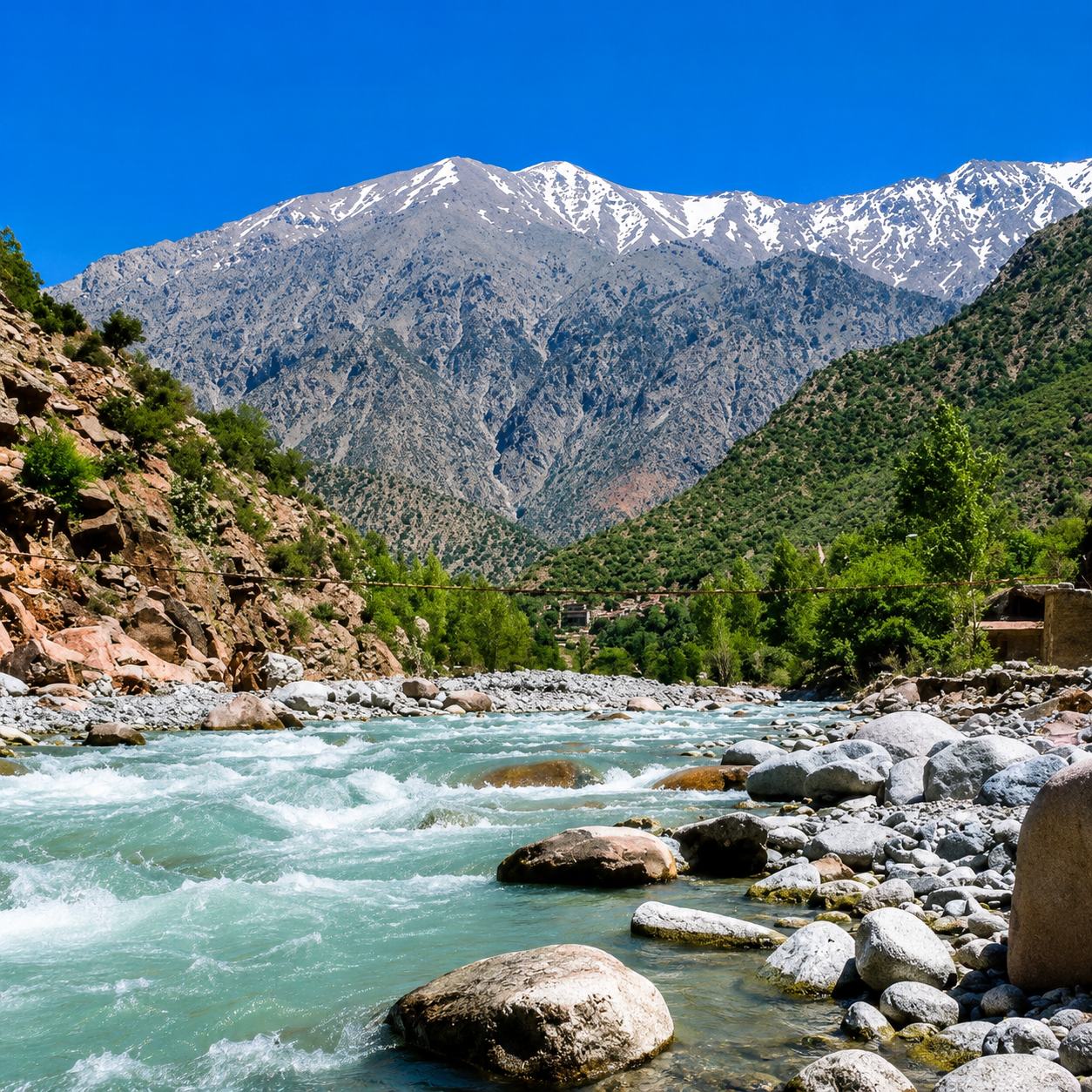
The transition from Marrakech to the High Atlas is sudden and striking. Within hours, palm trees give way to walnut groves, and city traffic is replaced by mule paths and mountain silence.
Villages such as Imlil, Aroumd (Armed), and Tacheddirt mark the gateway to trekking routes that wind through valleys carved by centuries of foot travel. These settlements are not attractions – they are home. Life here follows the rhythm of daylight, harvest cycles, and weather patterns.
Walking the Valleys: Step by Step Into Berber Life

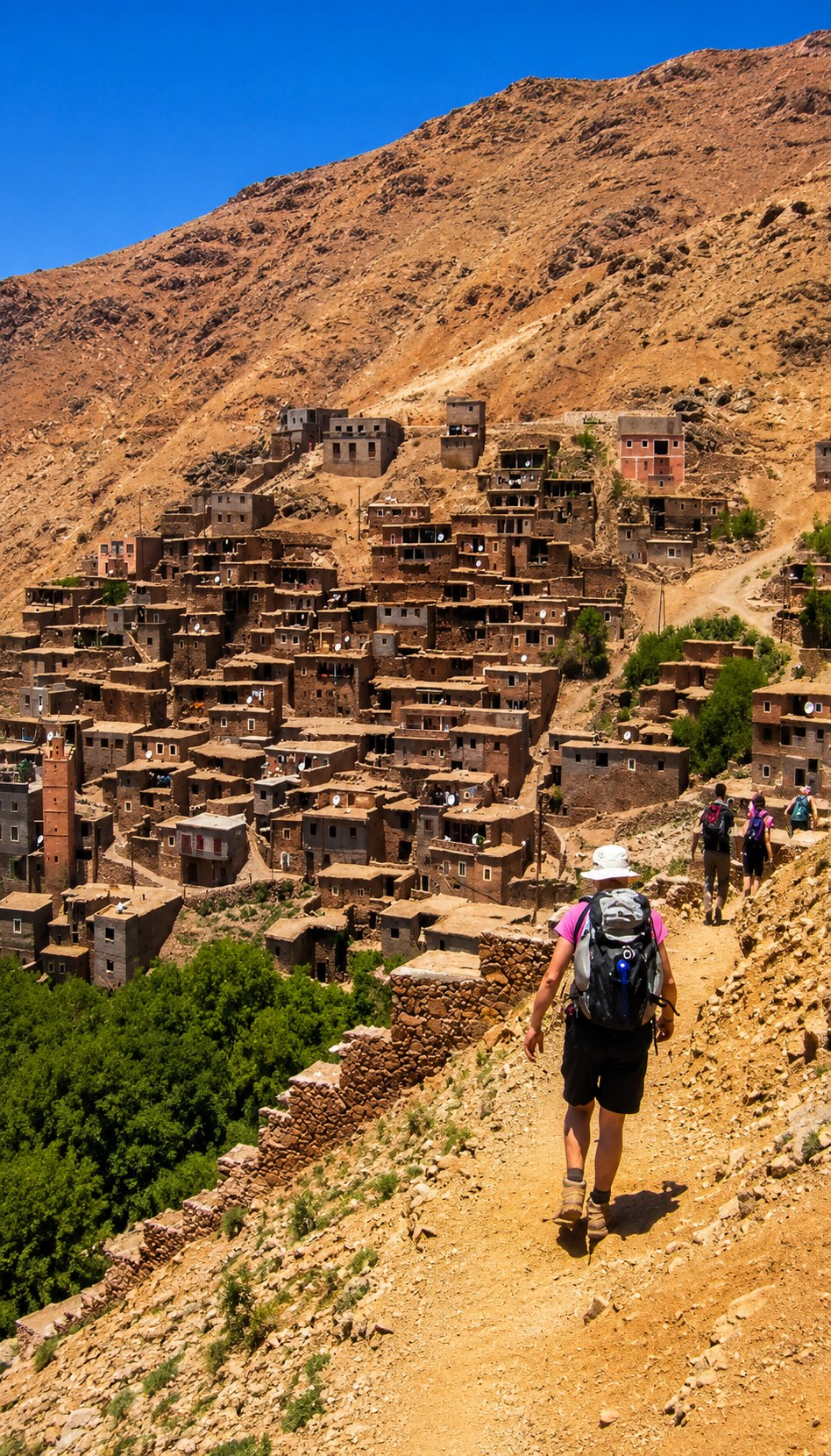
Trekking routes pass through villages like Aït Souka, Aït Mizane, and Tizi Oussem, where everyday life unfolds in plain sight. Children walk to school along stone paths, farmers tend small plots of land, and elders gather in the shade to talk, observe, and welcome passersby.
The trails connect communities that rely on each other for survival. Walking them offers insight into:
Terrace farming adapted to steep terrain
Seasonal migration patterns
A strong sense of collective identity
Overnight in the Mountains: Silence and Stars
Evenings in the Atlas Mountains are calm and grounding. Nights in or near villages such as Aroumd or Tachedirt are defined by silence, broken only by wind or distant voices.
Without urban noise or artificial light, the mountains reveal a sky filled with stars. Rest comes easily here, and mornings arrive gently, accompanied by the sounds of daily life beginning again.
Practical Insights for an Atlas Mountains Trek
Best time to trek
April to June and September to October
Trek difficulty
Moderate, adaptable to different fitness levels
What to bring
Good walking shoes, layered clothing, sun protection
Time needed
2 to 4 days for meaningful immersion
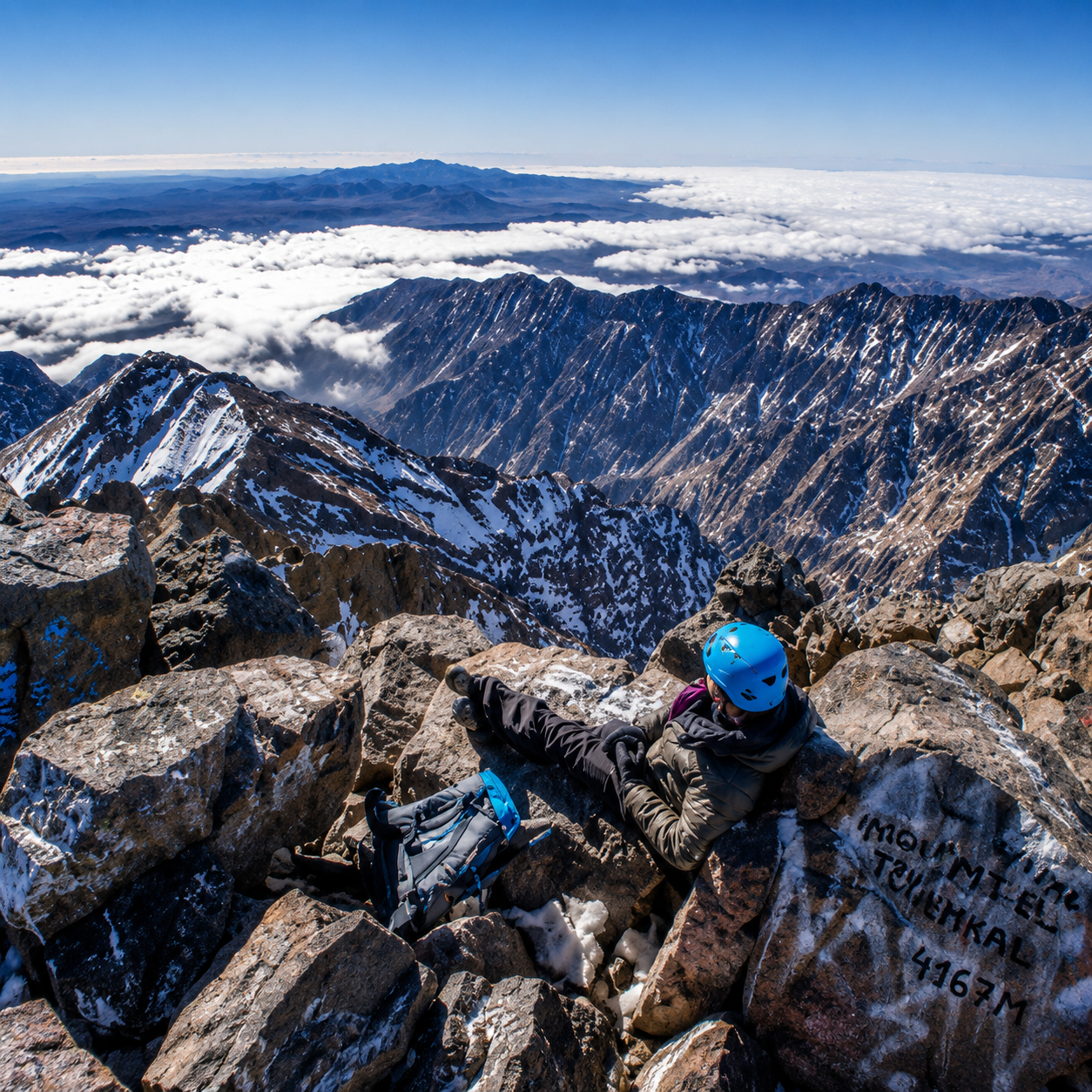
Why the Atlas Mountains Leave a Lasting Impression
The Atlas Mountains do not overwhelm with spectacle. They teach patience, humility, and awareness. Walking between Berber villages is a reminder that travel can be slow, meaningful, and deeply human.
This is not about conquering peaks. It is about understanding how people and landscape shape one another over generations.